
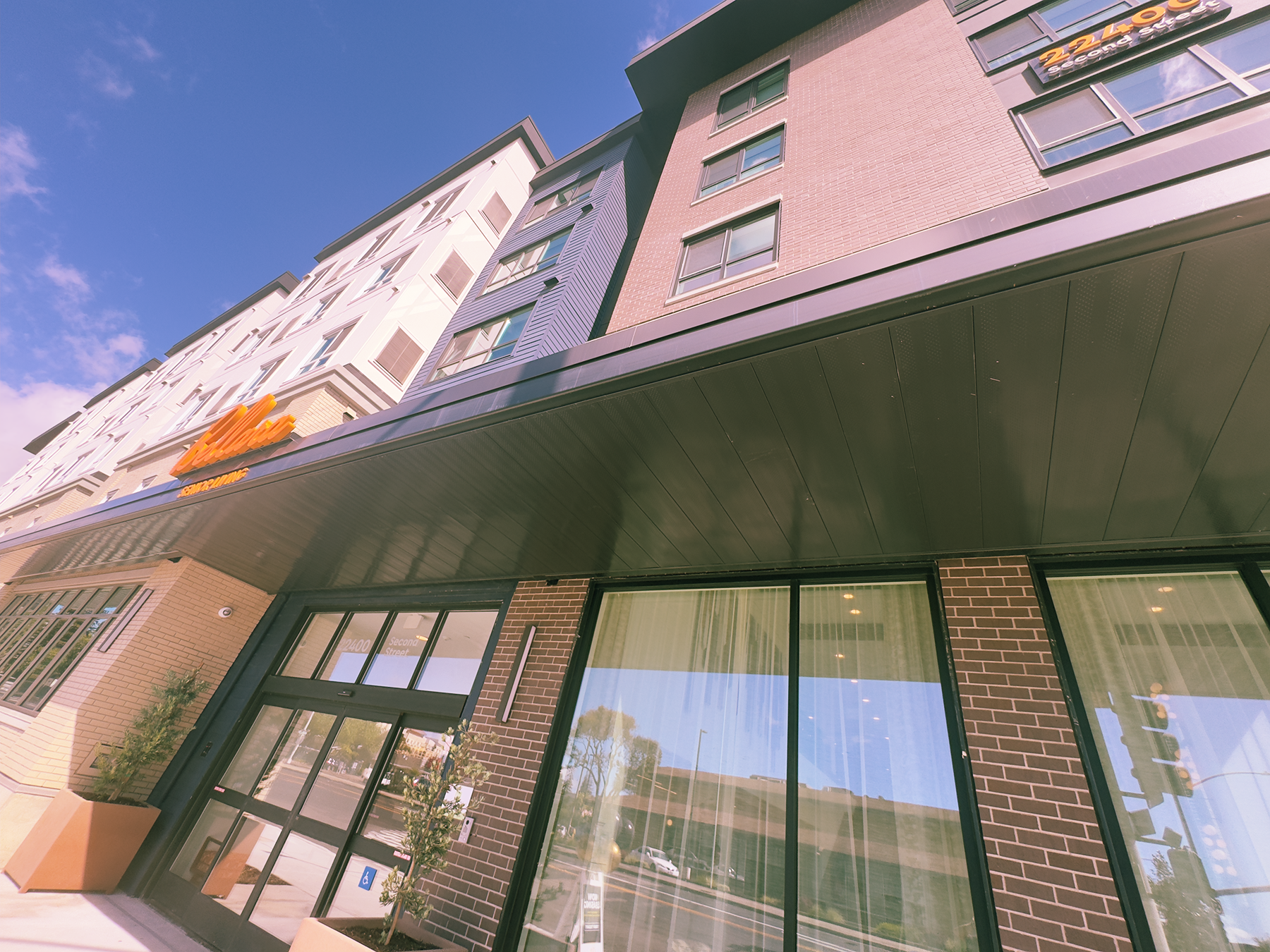

Vol 1, Issue 7, Monday, August 3, 2026
BULLETIN
Jacob Harryman informed the Buzz on Friday, July 31, that “I will be filling in as the Interim Executive Director while the community searches for a permanent Executive Director.” At press time we have not been able to obtain any additional information about the departure of former Executive Director, Jeff Sumabat. We expect to be meeting with new, acting Director Harryman on Monday, August 3, and will update Buzz readers with further bulletins as they arise.
Survey Analysis
The Buzz asked Claude Fable 5 AI to compare the results of last month’s Bellara Residents’ survey about satisfaction with dining room food and service to similar institutions in the Bay Area and nationwide. Claude answered, “some dissatisfaction with institutional food is universal, but 81% dissatisfaction is not ‘just like most places….’ An 18.6% satisfaction rate on food quality and 25% on service is well below the normal range, not typical grumbling "
Our Resident July survey found:
Total surveys distributed = 128
Total surveys returned = 51
% Response = 39.8%
% Respondents who were satisfied with the food = 18.6%
% Respondents who were not satisfied with the food = 81.4%
% Respondents who were satisfied with the dining room service = 25%
% Respondents who were not satisfied with the dining room service = 75%
Here is Claude’s complete analysis:
“Short answer: your numbers do look unusually bad compared to what's typically reported elsewhere — though there are some important caveats about comparing surveys.
“National benchmarks. There is no single national database that asks the exact same yes/no "satisfied with food quality" question your newsletter used, but the available data points cluster far above Bellara's figures. In academic studies of long-term care dining, satisfaction rates typically land in the 65–90% range: one study found older adults were 65.1% satisfied with their facility's food service, another found 89% of residents were satisfied or somewhat satisfied with the food service, and a small single-community study found 86% of residents satisfied with the food and food service. On the industry side, the J.D. Power 2025 U.S. Senior Living Satisfaction Study found satisfaction rising across the board, with dining specifically driving gains in the assisted living segment (up 11 points year over year). So while food is famously the number-one complaint category in senior living — complaints about taste, variety, presentation, freshness, and repetitive menus are common everywhere — "common complaints" at most places still coexist with majority satisfaction. An 18.6% satisfaction rate on food quality and 25% on service is well outside the normal range, not typical grumbling. PubMed + 4
“Bay Area comparison. Unfortunately there's no public regional benchmark. California doesn't require assisted living / independent living facilities (RCFEs) to conduct or publish resident satisfaction surveys. Your best practical comparison tool is U.S. News's Best Senior Living ratings — in 2026 they analyzed more than 540,000 resident and family survey responses at over 3,200 communities nationwide, including satisfaction with food. You can look up individual Hayward, Castro Valley, and East Bay communities on health.usnews.com and see whether they earned a "High Performing" badge in dining, which goes to communities scoring in the top 25% nationally for food. That won't give you a raw percentage to compare, but it shows how neighbors stack up. U.S. News & World ReportPR Newswire
“Important caveats: With only 51 responses, the margin of error is roughly ±13 percentage points. That's wide — but even the optimistic end of the range (about 32% satisfied on food quality) is still dismal by industry standards.
“Response bias cuts in your facility's favor, though only so far. Unhappy people are more motivated to return surveys, so the 77 non-respondents are probably happier on average than the 51 respondents. But here's the striking part: even if every single non-respondent were satisfied, total food-quality satisfaction would top out around 67% (roughly 10 satisfied respondents plus 77 non-respondents, out of 128) — which would merely match the low end of published figures. Any realistic assumption puts Bellara below typical.
“Question wording also matters. A blunt satisfied/not-satisfied question tends to produce lower "satisfied" numbers than a 5-point scale “where "somewhat satisfied" gets counted, so a modest chunk of the gap may be methodological.
“Bottom line: some dissatisfaction with institutional food is universal, but these kind of numbers at well-run communities trigger a chef change, or a vendor review. The consistency between the two questions (food quality and service both deeply underwater) suggests a real problem rather than survey noise — and the survey itself gives residents solid, concrete grounds to press management for specific changes and a follow-up survey in six months to measure improvement.”
Musings

Waterfall, by M.C.Escher
There is something oddly comforting about holding two contradictory ideas at the same time. Consider a paradox created roughly 2,600 years ago by the seer and philosopher Epimenides who, born on the island of Crete, declared: "All Cretans are liars."
Let's bring that closer to home: "I am a Bellara resident. All Bellara residents are liars." If the statement is true, then this writer — as a Bellara resident — must be lying, which makes the statement false. But if the statement is false, and this writer is telling the truth after all, then the statement must be true. Round and round we go, like a revolving door with no lobby.
(Sharp-eyed logicians will object that the escape hatch is the word "all" — perhaps this writer lies while some other Bellara resident is scrupulously honest. Fair enough. For an airtight version, philosophers boil it down to a single sentence: "This sentence is false.")
In his very thick book Gödel, Escher, Bach, Douglas Hofstadter serves the paradox as a matched pair:
The following sentence is false.
The preceding sentence is true.
Why call such a thing "comforting"? Perhaps because a paradox, by definition, is a statement that seems self-contradictory on its surface yet hints at some deeper truth underneath. Knowing that such contradictions can be real — can be stated plainly, in a single breath — resonates with us because it reflects something about how the "real" world actually works. Life at any age rarely resolves into tidy true-or-false. Most of what matters is both at once.
A Bit of History
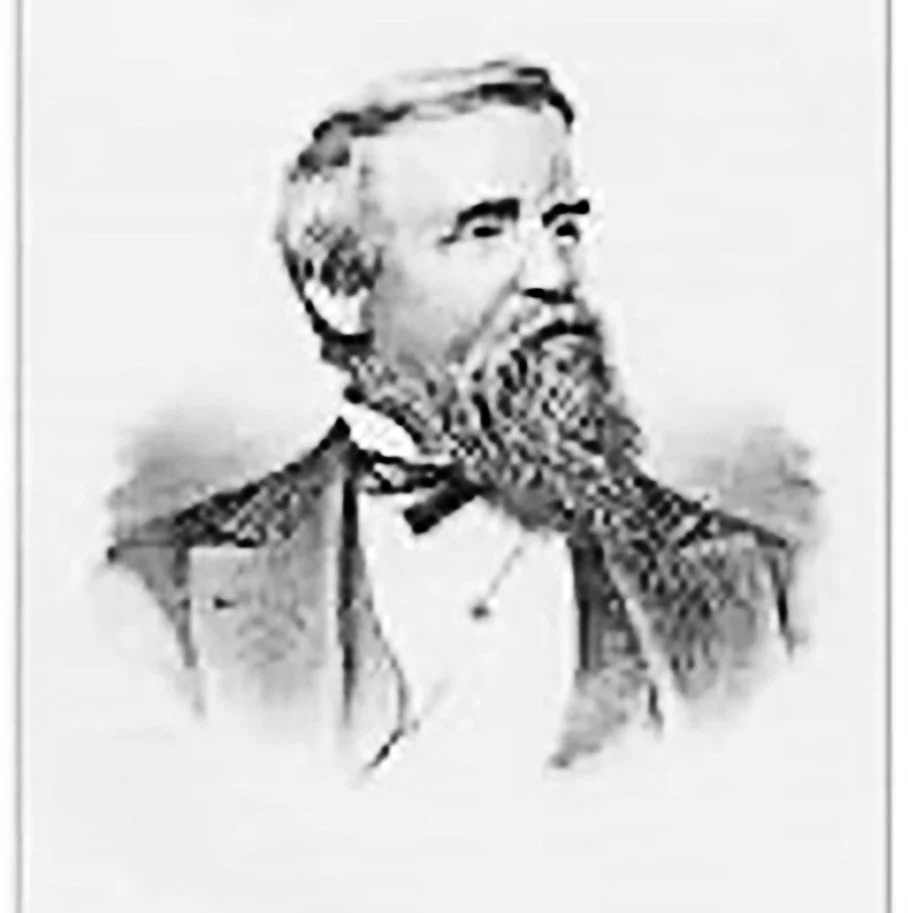
Joel Russell
The Street Outside Our Windows: Russell Way and the Lost Town of Russell City
Russell Way, the street that runs along the North-West side of Bellara, carries a name with a remarkable — and ultimately heartbreaking — history.
The street is named for Joel Russell, a Gold Rush–era pioneer, teacher, abolitionist, and lawyer who migrated from Maine to California in the early 1850s. Like most forty-niners, he found no fortune in the mines, so he turned to the land instead: beginning in 1853 he settled on bayside acreage that was then part of the Soto family's Rancho San Lorenzo land grant, purchasing it outright a few years later. He went on to serve as Hayward's city attorney and as justice of the peace, and he remained a pillar of the community until his death in 1888. [1, 2, 3]
The farming settlement that grew on his land — known first as "Russell," and eventually as Russell City — was established in 1853 on the Hayward shoreline, in the area that today lies between the Hayward Executive Airport and Chabot College, in what is now the industrial district of west Hayward. Its first immigrant families were largely Danish (for a time the area was nicknamed "Little Copenhagen"). But in the 1940s and 1950s the community's character changed. Because Hayward, San Leandro, San Lorenzo, and other surrounding towns enforced racial covenants that barred home sales to anyone who was not white, Black and Latino families arriving in the postwar Bay Area found that Russell City was one of the few places they were permitted to buy land and build. And build they did: an unincorporated town of some 1,400 residents, with its own elementary school and library, seven churches, thirteen businesses — and a nightlife that made it famous. Russell City became known as a West Coast blues capital, where legends including Ray Charles, Etta James, Big Mama Thornton, and T-Bone Walker performed. Hayward's annual Russell City Blues Festival honors that legacy to this day. [1, 2, 3]
Then it was destroyed. In the early 1960s, Alameda County and the City of Hayward moved to clear the town for commercial and industrial redevelopment. Approximately 700 parcels of land were seized, many through eminent domain; residents who resisted watched buildings burn in suspicious fires; and by 1964 — a little over 110 years after Joel Russell first settled there — the last families had been forced out, the town bulldozed, and the land annexed into Hayward and rezoned for industry.
In November 2021, the Hayward City Council formally apologized for the city's role in the forced relocation, and in 2022 it launched the Russell City Reparative Justice Project. That work is now bearing fruit. The City describes the plans this way on its official website:
"The City of Hayward and Alameda County Supervisors Elisa Márquez and Nate Miley jointly announced plans to establish a $900,000 redress fund to make amends to former Russell City residents who had property seized during the 1960s. During the period, approximately 700 parcels of Russell City land were acquired, and approximately 1,400 residents of the multi-racial, multi-ethnic Russell City community were displaced to make way for commercial and industrial redevelopment."
Since that announcement, the fund has grown to more than $1.1 million with an additional contribution from County Supervisor David Haubert, and in the summer of 2025 the Alameda County Board of Supervisors voted to approve it. Direct payments to surviving former residents are now being organized — not as compensation for what was lost, the City is careful to say, but as a concrete acknowledgment of a lasting harm.
And what of the land's first people, the Ohlone, who were displaced long before Russell City existed? No payment fund like Russell City's has been created for their descendants, but the tide of acknowledgment is turning. Governor Newsom formally apologized in 2019 for California's role in the destruction of its Native peoples, and Hayward's 2021 apology resolution named its indigenous community members alongside the families of Russell City. In 2024, in the largest urban return of land to Indigenous hands in California history, the City of Berkeley purchased the 5,700-year-old West Berkeley Shellmound site — part of the first human settlement on the shores of San Francisco Bay — and returned it to an Indigenous-led land trust. Meanwhile the Muwekma Ohlone Tribe, descendants of this region's original inhabitants, are still fighting to restore the federal recognition that was improperly stripped from them in 1927 — a struggle that took them, in 2024, on a march to the State Capitol. For the Ohlone, the fullest measure of redress remains a work in progress.
You can read much more about Russell City in the book Russell City (Images of America series), by María Ochoa with the Hayward Area Historical Society, available at the Hayward Public Library. Diane Curry, Director and Curator of the Hayward Area Historical Society, describes it this way:
"It is a good book for Russell City, especially the intro. If you are looking for more info, check our website — scroll down to the bottom of the page for 'Russell City Reference Material.' These are articles related to RC and a thesis about it. Additional info can be found on the City of Hayward's website, and a great essay by former residents here."
(Ed. note: This “great essay” essay is a well-written account of how the Ohlone were forced out by Spanish and then American settlers, what Russell City became, and how its newer residents were themselves systematically driven out. Those interested may also want to seek out "The Apology," a recent feature-length documentary about Russell City by filmmaker Mimi Chakarova, (not yet streaming, but available for community and library screenings through gooddocs.net — a preview is available on Vimeo) which county supervisors have credited with helping move the redress fund forward.)
The next time you walk or drive along Russell Way, spare a thought for the town that once bore that name — and for the neighbors, just a few miles west of us, who are finally being heard.
An added note from Ms. Curry: “I also want to add that the street is named Russell Way because Joel Russell and his heirs owned that area too. In fact, his son lived on Russell Way for many years. Two grandsons lived on the street, Lloyd Russell at 1154 Russell Way and Thomas B. Russell at 1192 Russell Way. Both houses are gone.”
Sources: [1] City of Hayward, "The History and Heritage of Russell City" and "Russell City Reparative Justice Project" (hayward-ca.gov); [2] Hayward Area Historical Society; [3] KQED and ABC7 News coverage of the Russell City Redress Fund, July–August 2025.
Vote!

From the Alameda County Registrar of Voters:
“A Special General election will be hold on Tuesday, August 18, because no candidate received a majority of the vote (50% + 1) in the Special Primary Election held on June 16, 2026. The Special General Election will fill the remainder of the vacant term following the resignation of Representative Eric Swalwell. This term expires in January 2027.
“This election is separate from the November 3, 2026 General Election, which will include the race for the full 14th Congressional District term.”
Letters to the Editor
Book Club
Shirley Lipkin
805-405-2678
My name is Shirley Lipkin, and I’m a Bellara resident. My Bichon Frise, Teddy, and I, are residents on the fourth floor. I also happen to be the facilitator/book club leader of the Bellara Book Club.
We meet on the last Monday of the month, at 4:00 pm, at the long table towards the back of the Bistro, right opposite the mailboxes. All book lovers are welcome to join! We just finished discussing “Remarkably Bright Creatures,” by Shelby Van Pelt, and are planning to start “Yesteryear,” by Caro Claire Burke.
Please bring your curiosity and suggestions for our next upcoming book!
Loving Hayward
Thank you, the Buzz, and others who are bringing information to us about Bellara and Hayward.
I love Hayward. I like to be part of the community and learn about the people who came here decades ago and to welcome those who have come recently. Many of us are people who have things to share, friendly neighbors and a beautiful city to explore. We also have a diverse community of people from all over the world. They have shown us their ways of doing things and we have shared ours. If you look at an AI summary about Hayward, it will tell you that we are “characterized by a diverse population with no single racial group holding a majority.” Alameda County has been designated as being the most diverse county in California and ranks higher than most other counties in the United States when it comes to ethnic diversity. The population at last count was 162,954 and we are the third largest city in Alameda County. Our “flower” is a carnation ~ one of the flowers that shows beautifully for days after picking! We have many parks that recognize the settlers who came here first and even though the “downtown area” isn’t fancy like other local cities, we’ve managed to keep some of the old buildings.
My next chat will be more about some famous people who have lived here. (P.S. ~ long time Haywardites, please tell me your stories so we can share!)
Diane Riggs ~ 54 year California transplant!
For the Month of August
Dear Reader,
Food is on our minds this August issue. We include an analysis of how last month’s dining room survey compares to other similar institutions, a food fantasy written by the off-site artist Eric Rewitzer, a chicken soup recipe from our new columnist Chef Bellarabee, and one of our Musings reminisces about Howard Johnson’s. We explore a little bit more of our local history, and scattered throughout this issue you will again find several “Musings.” Bellara Ears shares some thoughts about music, we include a reminder to vote in the local special election, we republish (with permission) a short Poem by James Monday, and we publish our very first two Letters to the Editor. At the bottom of the page are two new items for sale in the Classified section.
A Food Fantasy
A FANTASY by Eric Rewitzer of 3 Fish Studios
Valerie Smart
When Valerie Smart finally agreed to move into the retirement community in Hayward, she did it with the same mix of reluctance and practicality that had carried her through the hardest decisions in her life. She and Nick had talked it over so many times that the conversation became almost ritual. The house in the country had become too much. Errands took planning. Stairs took courage. Their kids tried to be gentle, offering “maybe it’s time” in the soft voice adult children use when they are trying not to sound like parents themselves.
Nick took it in like a filmmaker, which is what he had always been at heart. He looked at the situation, framed it, found meaning in it. He told himself that stories did not end when the setting changed. They simply turned into something else.
The apartment they moved into was smaller than anything they had lived in together, but it was bright and tidy and safe. There was a small kitchen, a kitchen island with two chairs, and windows that looked out across the suburban sprawl of Hayward to the green hills to the north. They missed their old place, the trees and the quiet and the sense that the day could stretch endlessly if they wanted it to. But they told themselves, honestly, that there was still life here, too.
The facility came with a meal plan. Breakfast, lunch and dinner served downstairs in a dining room that did its best to look cheerful. Before they moved in, Valerie let herself hope a little. She had spent a lifetime thinking about food — not just how it tasted, but what it meant. She knew this wasn’t going to be fine dining. But she also knew that food, even simple food, could be made with kindness.
It didn’t take long for that hope to fade. The meals were predicatable in the way institutional meals tend to be, but that wasn’t the real problem. The food felt indifferent. Chicken was just chicken. Vegetables were always cooked beyond memory. Soups were salty without actually tasting seasoned. Plates arrived like obligations.
She and Nick began relying more on the little kitchen upstairs. Nick had become the cook by necessity, and he took pride in it. He chopped, stirred, and plated carefully, and Valerie offered guidance from her chair. She would suggest heat adjustments, ask him to taste, or gently remind him to let the garlic relax in the pan instead of rushing it. They ate quietly, gratefully, but every now and then they still went down for dinner, mostly to see the people and be part of the rhythm of the place.
The night everything shifted, the meal was meatloaf. The slice on the plate trembled slightly when she pressed it with her fork. The potatoes had the texture of paste. Even the peas seemed worn out. Nick leaned toward her and told her, kindly, that they’d make something later. She appreciated the offer, but something in her resisted the idea of simply working around the problem again.
She put the fork down.
“I want to see where this is coming from,” she said.
She didn’t march anywhere. She didn’t cause a scene. She simply stood, excused herself, and found her way into the kitchen. Stainless steel. Fluorescent lights. The clatter of trays and the hum of fans. Everything was orderly, controlled, and tired.
The woman in charge introduced herself as Carla. She was wary but not hostile. Valerie told her she wasn’t there to complain. She just couldn’t reconcile the food being served with what it could be, even inside limits. They talked for a few minutes. Valerie asked questions. She listened. She acknowledged the reality of budgets and health regulations and time pressure. When Carla finally asked what she would do differently, Valerie said, simply, that she would start small. She would try to cook like someone might actually care.
Later that night, curiosity got the better of Carla. She searched Valerie’s name and sat there staring at old reviews and faded photos from another era: dining rooms filled with warmth, interviews describing food as generous and honest. She showed the cooks the next morning. They were quiet in the way people get when they suddenly realize they’ve overlooked something important. None of them suggested dragging Valerie back into the kitchen. They could see she was older now, that being on her feet for hours would come at a cost. But they felt something like respect, and they decided together to ask whether she might talk with them.
Carla arrived at the apartment one afternoon carrying the coming week’s menu. Nick made tea. Valerie invited them to sit. They spread the pages out on the kitchen island. Chicken. Fish. Soup. Sandwiches. Meatloaf again. Nothing remarkable. No need for reinventing anything.
Valerie didn’t criticize. She asked questions. What the herbs did they have access to? Did they ever taste the gravy before sending it out? How did they handle scraps, and did they realize how much flavor lived in onion ends and celery tops if they simmered them gently instead of throwing them away? She didn’t offer recipes. She talked about intention. What did they want people to feel when they took the first bite? Was the plate meant to just fill a stomach, or remind someone they were still visible?
They met again the following week. And the week after that. Always at Valerie and Nick’s table, always with tea and menus and quiet conversation. Downstairs, the staff started tasting more. They browned onions instead of steaming them. They added lemon at the end of a dish to wake it up. They saved scraps and turned them into broth. Nothing dramatic, but everything thoughtful.
Residents noticed in the way people notice comfort. They stopped pushing food away. They finished plates. Someone wrote a small note that said, “Dinner tasted like dinner tonight,” and Carla pinned it to the board.
Word eventually reached administration. Fewer complaints. Slightly different food orders. Happier dining room. The director asked whether they should formalize it somehow — talks, events, maybe a newsletter feature. When the idea reached Valerie, she said no. She didn’t want to be a program. She wanted to be left as a quiet voice at a table.
The night everything came together, they served roast chicken. Real roast chicken. Not perfect, but honest. The skin crisped. The potatoes had edges. The room smelled like something worth gathering for. Valerie tasted her dinner and felt, for a brief second, that she was back in a world she recognized.
A man passing by their table stopped and said “Dinner was good tonight,” and continued on without waiting for a response.
Back upstairs later, Nick washed their cups. Valerie sat by the window and watched the city lights appear, one by one. She said she had thought leaving their house meant leaving who she had been. But it turned out that was not entirely true.
You didn’t always have to be in the kitchen to feed people.
Downstairs, the staff cleaned up for the night, slower than usual, careful in a way that felt respectful rather than tired. Someone taped another anonymous note to the wall: “Thank you for caring.”
No one framed it. No one took a photo. It simply stayed there, the way most good things do. And life went on, as it always does, with meals that now tasted like they belonged to the people eating them.
Keeping It Simple
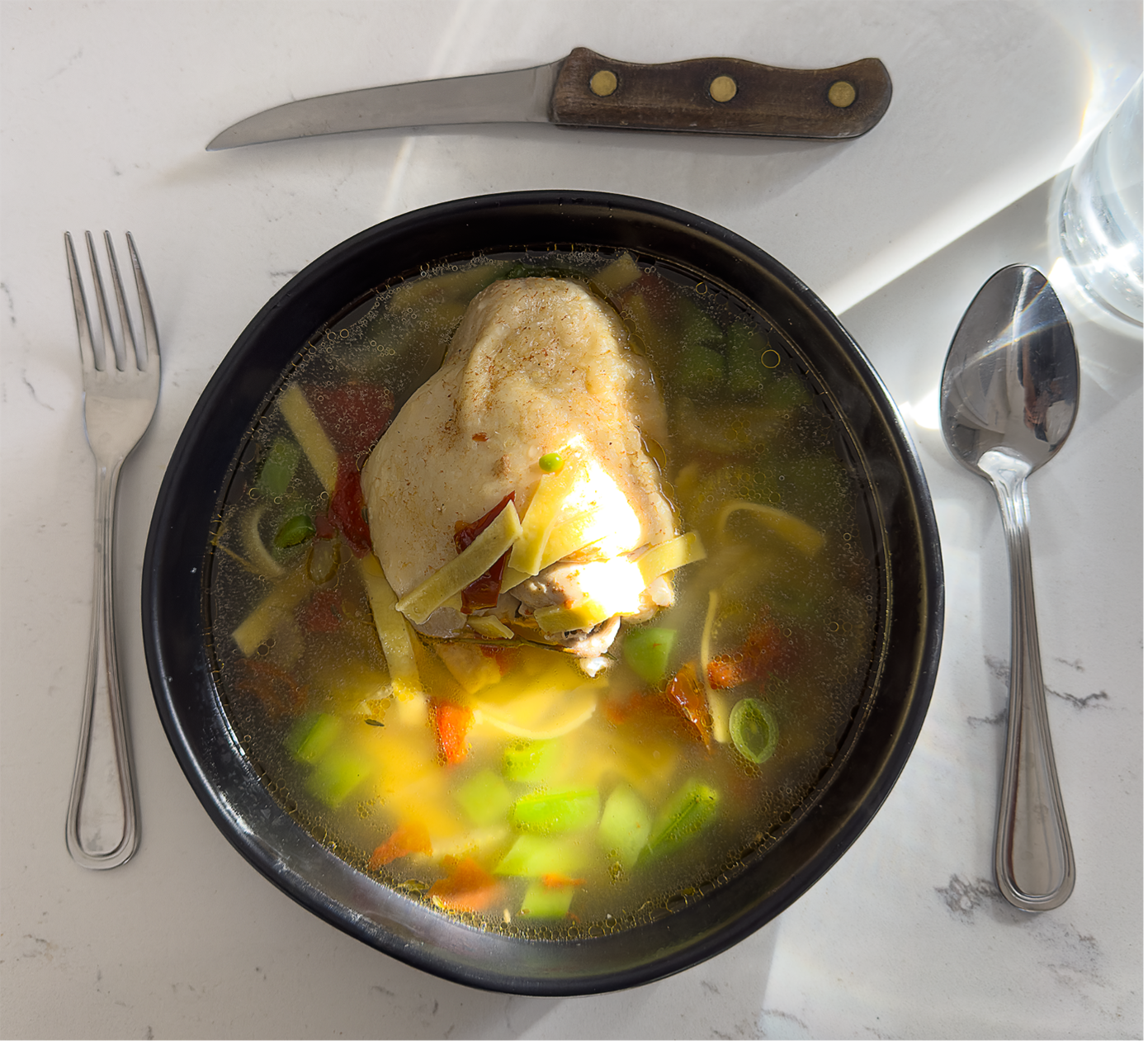
With Chef Bellarabee
“As chefs get older, they realize they need not do somersaults to impress guests who just want a fine meal.” – NY Times Food Critic John Mariani, about 10 years ago.
Chicken Soup – a play with food in 3 acts.
Serves 1-2
Ingredients
5 chicken thighs, preferably skin on (the fat adds important flavor to the broth)
Water
¾ cup chopped fresh or canned tomatoes
A generous handful snap peas, cut crosswise into one-inch pieces, or use shelled peas
A generous handful of fresh fettuccini (or substitute any pasta)
3 sprigs fresh thyme or a generous pinch dried thyme
Salt
Act One: In the morning, place 3 chicken thighs in a pot, add water to cover by at least an inch, place on the left front electric burner in your Bellara Apartment, turn the dial to the left and down to Low. Set a timer for 3 hours. Walk away. When 3 hours are up, come back, turn the stove knob to off, pull the lid partly aside, and walk away.
Act Two: About an hour and a half before you plan to eat dinner, remove the thighs from the water and set aside as pet food or discard. Add 1 to 2 fresh thighs to the broth along with the chopped tomatoes Add the thyme and salt. Cover and return the pot to the same left front burner. Turn the knob to the left, down to Low. Set a timer for 1 hour and 10 minutes.
Act Three: When the broth and thighs have cooked for 1 hour and 10 minutes, raise the heat to High. When the broth starts to boil, add the pasta and cook for the time recommended on the package it came in plus 1 minute. When that time is up, add the peas and as soon as the pot returns to a boil, remove and serve the soup.
Note: If you try this dish, drop a note to Chef Bellarabee using the contact form at the bottom of this page. Tell him/her how it all came out and if you’d cook this dish again.
You Can Hear It

Jacob Collier
by Bellara Ears
Last month we lingered in the ordered beauty of Bach. This month we’re going to a party in Lisbon. Our host is Jacob Collier, a Londoner born in 1994 who grew up in a house so stuffed with instruments that picking them all up was apparently easier than putting any of them down. He got his start filming himself in the family music room, singing every part of impossibly lush arrangements — one Jacob in each corner of the screen — until Quincy Jones saw the videos and essentially said, "Who is this kid, and where do I sign?" Several Grammys later, Collier has developed a signature technique: he turns entire concert audiences into his choir, teaching thousands of strangers their parts on the spot and conducting them with a flick of his fingers, as if harmony were something you could pull out of the air. (It turns out you can, if you're Jacob Collier.) Which brings us to this month's selection: Collier’s version of Freddie Mercury's "Somebody to Love," performed live in Lisbon in 2022, where Collier coaxes a sold-out hall into a six-part harmony so glorious you'd swear the whole city rehearsed. Freddie famously overdubbed Queen's voices to sound like a hundred-person gospel choir. Jacob just went and got the choir. Have a listen — and do sing along; everyone else is.
If you want to hear Fredie Mercury singing this song his own way, try this 1981 Montreal version.
Enough? Well, here’s one more, a link to choir conductor Johan Bestor commenting on the Jacob Collier version we linked above, starting, then stopping the music to wonder and suggest musical and personal thoughts, concluding that, in Collier’s hands, “You are the music.”
Are you the music after listening to these versions? Send us an email. What do you hear?
Musings
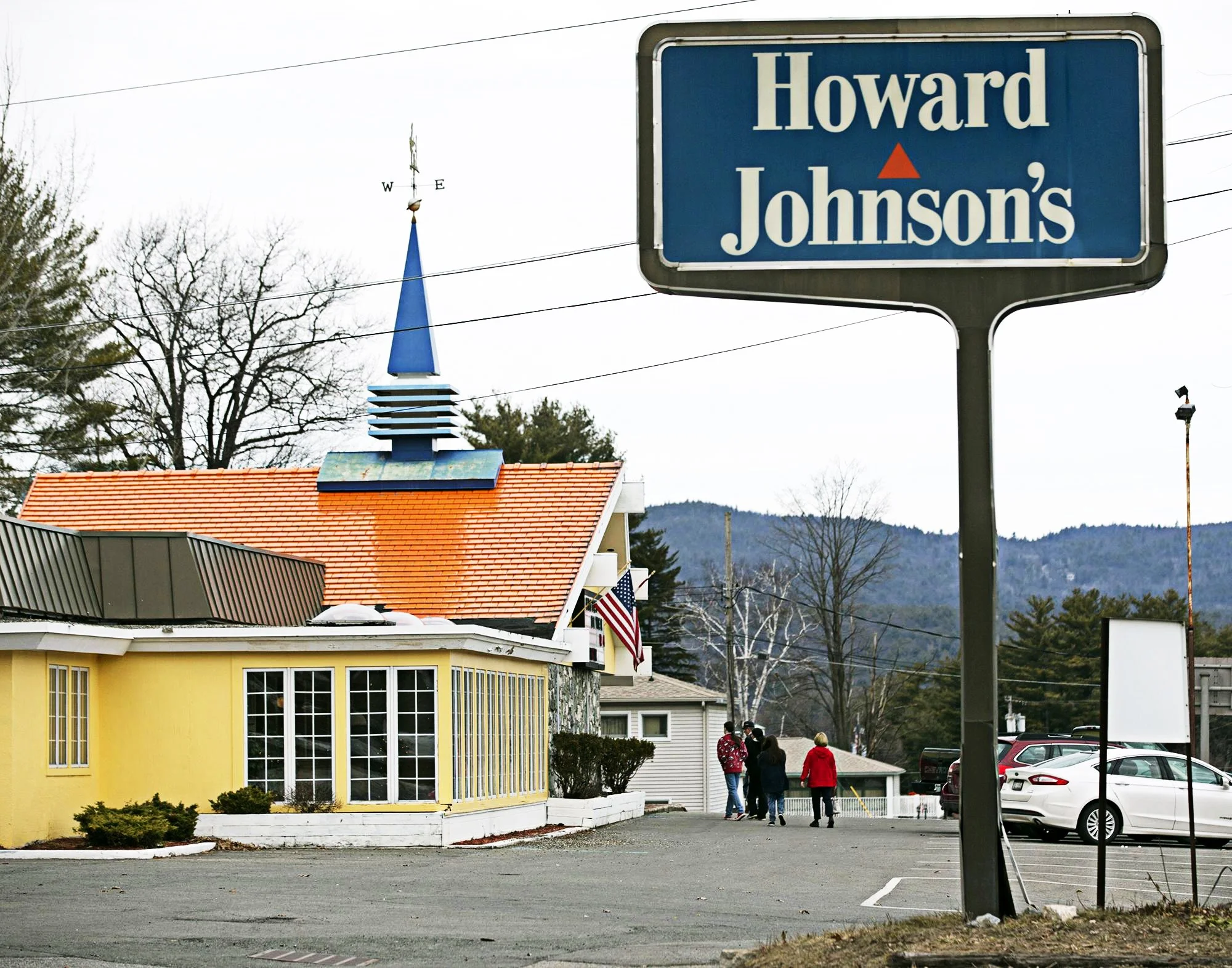
From the substack by Ruth Reichl, the former New York Times Restaurant Critic and former Editor in Chief at Gourmet Magazine : “While we’re celebrating the 250th anniversary of our country I thought it might be a good moment to remember a few of America’s greatest restaurants.
“Not the big fancy ones: the ones that served straightforward fare at very fair prices.
“For instance, Howard Johnson’s. When the last one in New York City shut its doors in 2005, Jacques Pepin wrote a little ode to the American restaurant he once helmed. He reminisced about Mr. Johnson hiring him to revamp the food in 1959, and how he replaced margarine with butter, used fresh onions instead of dehydrated ones and made an astonishing ten tons of frankfurters every day from scratch.”
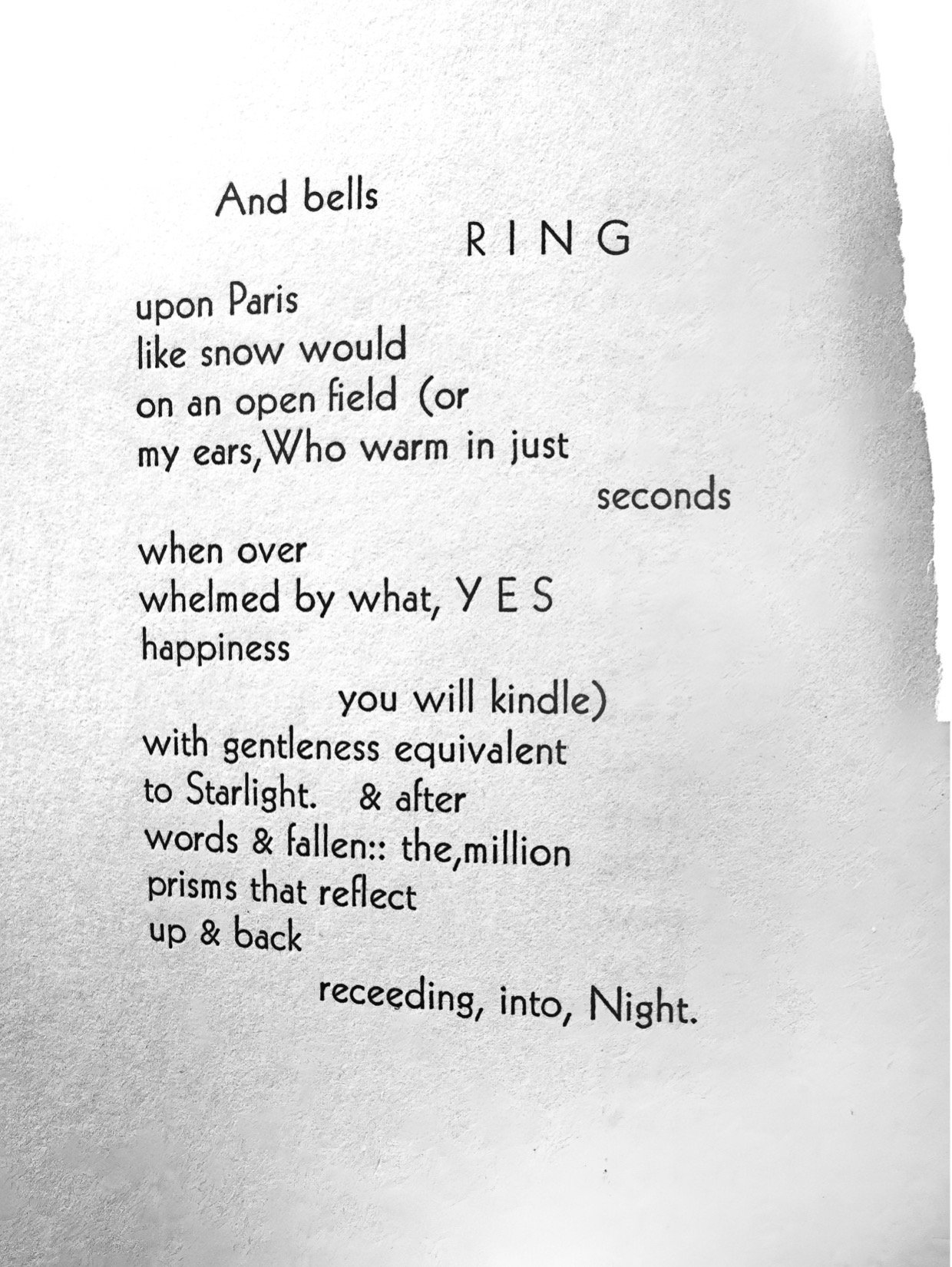
Poetry
By James Monday, from his book Tesseract. James Monday is an artist, writer, architect living in Amador City Ca.
August Shopping and Excursion Schedules
The Buzz has been unable to obtain any schedules for the month of August.
Lawrence ("Larry") S. Molton
Trish Barnes
Dorothy Schmitt, 1930 to 4/21/2026
Patricia Larsen
Karen Koehler
Bruce Alden de Garmeaux, 12/22/1935 to 11/19/2025
Cesarina (“Rina”) Melani, February 21, 1940 to September 22, 2025
Sandy Creque, January 26, 1936 to January 10, 2026
Ken Heckart, September 16, 1942 to March 6, 2026
Doris Edelman
Jerry Hightower
In Memoriam
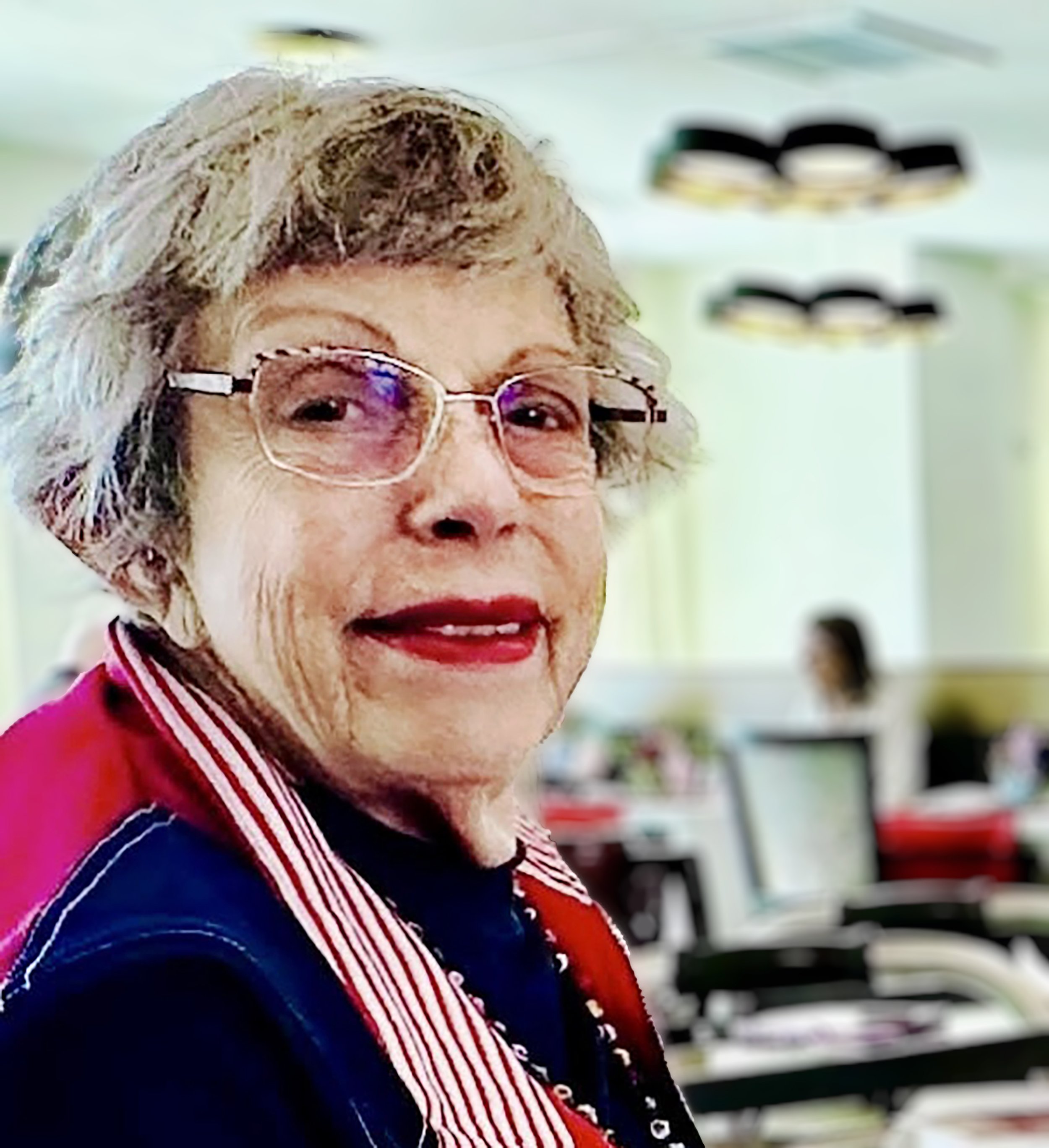
Mary Grodin. September 5, 1943 to January 24, 2026
by Karen Wandvik
Mary was one of the first Bellara residents, moving in late December 2024. I met her at the February 2025 Chinese New Year Brunch. In a red and black, Chinese-inspired blazer, she was dressed impeccably – as she always was whether on the way to a fancy restaurant or just relaxing in leisure wear. In conversations with her, I found out that she had a black belt in Karate and during her practice of martial arts had broken not only wood, but also a cement block with her bare hands!
She and her husband, Steve, had 2 sons, Howard and David, and were active members of a Corvette club for over 30 years; Mary was the treasurer of the Corvette club.
In 1986, Mary founded Grodin Financial Services in San Leandro. She also taught financial planning classes at the College of Alameda and Mills College and wrote a bi-weekly column for The San Leandro Times called “Ask Mary”, answering readers’ questions on financial topics. Her younger son, David, made his mother very happy and ensured Mary’s business legacy would live on by joining Grodin Financial Services.
Mary was quick to laugh, liked to drink Prosecco, and enjoyed baking. After the Mandelbread cooled down, she would appear in the dining room wearing an apron and rolling around the room with the bowl of cookies on her walker, using tongs to dole out a package of delicious Mandelbread to everyone who wanted some.
Let’s raise a glass of Prosecco to a smart, kind, and generous lady.
Help Wanted
[Your request for help from Residents for some project of yours]
WANTED: Someone to write profiles of staff members for the Buzz. Possibly one a month or more spaced out, depending on your time….. These profiles would be a way for Residents to get to know more about all these people who help us in so many ways. Please email: rickwise35@gmail.com.
Classifieds
Rear Window — 8.5” x 11” paper print, ready for framing. $25. Contact: rickwise35@gmail.com

Bistro — 8.5” x 11” paper print, ready for framing. $25. Contact: rickwise35@gmail.com
[List in Classifieds your free or for-sale items. And when they are taken, please notify the Buzz so we can pull down your post.]
The Bellara Buzz is published monthly for the Residents of Bellara.Editor: Rick Wise | rickwise35@gmail.com Vol. 1, Issue 7, August 3, 2026
Contact Us
You can email the Editor, Rick Wise, at: rickwise35@gmail.com Or you can use form at the right. Either way, send us your comments, suggestions, tips, excursion ideas, and so on. See “Submission Guidelines” — a direct link is at the top of this page.